There are not many books that manage to connect computation, mathematics and the natural world in a way that feels genuinely unified rather than forced. Gary Flake’s The Computational Beauty of Nature is one of them, and it is a remarkable piece of work for anyone with a serious interest in how simple rules give rise to complex behaviour.
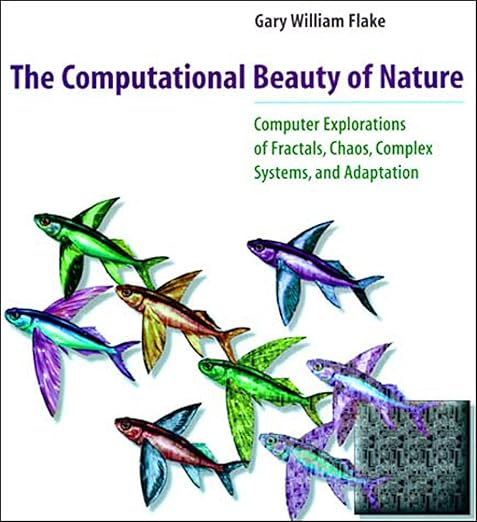
The book is organised around four broad themes: fractals, chaos, complex systems and adaptation. Within each theme, Flake explores a range of ideas and models, from cellular automata and neural networks to genetic algorithms and the mathematics of self-organisation. The connecting thread throughout is the idea that nature is, in a deep sense, computational, and that understanding natural phenomena increasingly means understanding the algorithms and processes that generate them.
What impresses me most about this book is the way it handles the mathematics. Flake does not shy away from the technical details, but he presents them in a way that serves the ideas rather than overwhelming them. A reader with a solid sixth form or first year undergraduate background in mathematics and computing will find the level accessible and rewarding.
The book also works particularly well as a bridge between disciplines. Students who are interested in both mathematics and computer science, or in the intersections between science and computation, will find it opens up a set of ideas that most standard curricula simply do not cover.
It is the kind of book that changes the way you look at things, whether that is a flock of birds, a coastline, or the behaviour of a financial market. I recommend it to any student or colleague with curiosity that goes beyond the boundaries of a single subject.