If there is one book I would confidently place on the desk of any student heading into a physics or engineering degree, it is this one. Riley, Hobson and Bence have put together what is, in my view, one of the most comprehensive and well-organised mathematical methods textbooks available at this level.
The scope is impressive. From vector calculus and linear algebra to Fourier series, partial differential equations, complex analysis and probability, the book covers virtually everything a physics or engineering undergraduate will encounter in their first two or three years. What sets it apart from similar texts is the way it balances rigour with accessibility. It does not cut corners mathematically, but it also never loses sight of the fact that the reader is ultimately trying to apply these methods to real problems.
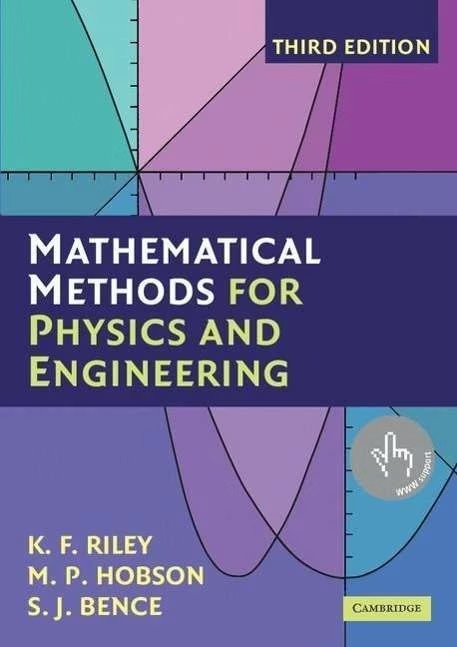
Each chapter is structured clearly, with worked examples that genuinely illustrate the technique being taught rather than just showcasing textbook-perfect scenarios. The problem sets at the end of each chapter are extensive, and solutions are available separately, which makes it a practical tool for both self-study and structured courses.
I’ve seen students come back to this book repeatedly across different years of their degree, which says a lot. It is not the kind of textbook you read once and shelve. It becomes a reference you return to whenever a new course introduces a topic you need to revisit properly.
Yes, it is on the pricier side, but given how long it stays useful and how much ground it covers, it represents genuinely good value. I highly recommend it for anyone planning to study physics, engineering, or applied mathematics at university level.