Rosenshine in IB Mathematics: Structure that Actually Works
“Rosenshine IB Mathematics” is becoming a useful way to frame something many of us are dealing with in classrooms. How do we maintain depth of understanding without losing clarity?
In IB classrooms, especially MYP and DP, we want students to think, to reason, and to communicatemathematically. But that level of thinking does not just appear because we ask good questions. It needs structure.
Rosenshine’s Principles of Instruction provide that structure. Start with daily review so prior learning is active. Present new material in small, manageable steps. Ask a lot of questions. Model what good thinking looks like.
Guide practice before expecting independence. Check for understanding continuously. Aim for a high success rate sostudents build confidence. Provide scaffolds when tasks are difficult. Move towards independent practice. Then revisit learning over time so it sticks.
None of this is limited to Mathematics. I have worked with colleagues across subjects, from Sciences to Humanities,and the impact is consistent. When lessons are structured this way, students are clearer, more engaged, and more confident.
Whether it is analysing a text, designing an experiment, or solving an equation, the principle remains the same: clarity before complexity. None of this is new. But in mathematics, it is essential. Mathematics is cumulative. If one layer is weak,everything above it becomes unstable.
One example that stayed with me is from a Year 8 class. A student was consistently hesitant in algebra. She avoided answering, waited for others, and lacked confidence. It was not a motivation issue. It was a clarity issue.
We changed the structure of lessons. Every lesson began with short retrieval. Simple, focused, consistent. Key skills came back again and again. New material was broken down into small steps and properly modelledbefore students were asked to attempt it.
During practice, I asked a lot of questions. Not to catch students out, but to see where they were. Misconceptions were addressed immediately. Support was there when needed, and then gradually removed.
By the end of Year 8, she was attempting questions independently. At the start of Year 9, she was contributing, explaining her thinking, and more importantly, she believed she could do it. The content did not change. The structure did.
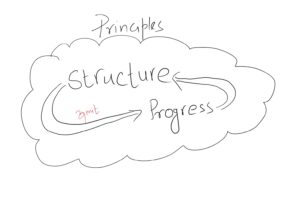
This is something I have also supported across departments. When teachers begin to embed retrieval, modelling, guided practice, and checking for understanding into their lessons, the shift is visible. Lessons become calmer, more focused, and more productive. Students spend less time guessing and more time thinking.
Students, in my experience, actually like structure more than we assume. They want to know what they are learning, how to approach it, and what a good answer looks like. When that clarity is there, they are more willing to engage with difficult ideas.
In an MYP lesson on linear relationships, that might look like a short retrieval on gradient and intercept, followed by a carefully modelled example, then guided practice, and only then independent work. In DP Mathematics AA, especially topics like optimisation, the structure becomes even more important. Define variables, form equations, differentiate, interpret. Step by step.
This is not about simplifying mathematics. It is about making the thinking visible. IB Mathematics asks a lot from students. Conceptual understanding, communication, and problem solving. Without structure, many students struggle to access this. Rosenshine provides a reliable way in. It makes classrooms more inclusive, reduces cognitive overload, and builds confidence over time. Structure does not reduce thinking. It enables it.
If we want students to think deeply in IB Mathematics, we need to design lessons that help them get there. Rosenshine is one of the most effective ways I have found to do that.