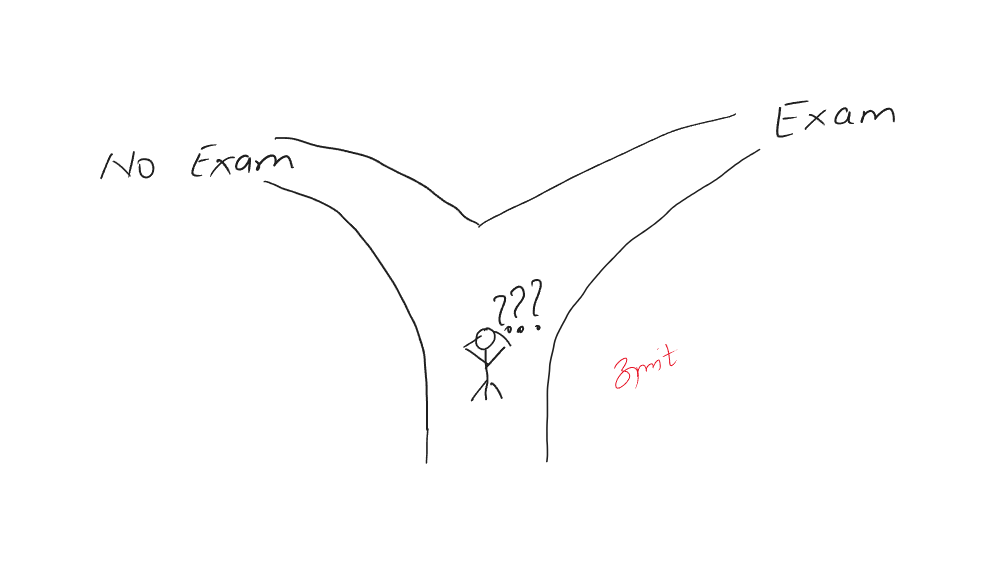
The recent decision by the IB to cancel examinations in parts of West Asia has triggered an important question. Not just for students, but for educators, school leaders, and policymakers.
If grades can be awarded without final exams, do we really need them?
At first glance, it feels like a moment of clarity. Students spend months preparing, working through deadlines, managing stress, and then everything comes down to a few hours in an exam hall. Sleep, anxiety, health, and sometimes even luck can influence outcomes.
And then, in extraordinary situations, exams are removed entirely, yet grades are still awarded.
So what does that say about the system?
This Is Not a New Situation
The IB has been here before during the COVID-19 pandemic. Exams were cancelled globally, and grades were awarded using a combination of coursework, predicted grades, and statistical standardisation.
The current situation is not a philosophical shift. It is a contingency response, and that distinction matters.
Yes, Grades Can Be Awarded Without Exams
But we need to be honest about what changes when exams are removed.
Predicted grades are not neutral. They are often optimistic and vary significantly across schools.
Schools differ in experience and rigour. A well-established IB school and a newer school may produce very different outcomes for similar students.
We also lose the only globally standardised benchmark in the system. Exams, despite their flaws, provide a common reference point across countries, schools, and cohorts.
Right now, the balance is skewed.
But the Criticism of Exams Is Valid
The current exam model compresses performance into a few hours. It rewards exam technique alongside understanding and is highly sensitive to stress, fatigue, and external circumstances.
In some contexts, it becomes deeply unfair. Imagine a 17-year-old revising for History while hearing missile interceptions outside. At that point, the issue is no longer preparation, but validity.
Can an exam taken under those conditions truly measure learning? Clearly not.
The Real Problem: Too Much Weight on One Moment
The issue is not that exams exist. The issue is how much they matter.
In many IB subjects, final exams carry around 70 to 80 percent of the total grade. That is a significant amount of pressure placed on a single event.
A more balanced system would distribute this weight across examinations, coursework, and ongoing assessment over time.
Will This Lead to Permanent Change?
Probably not in the way some might expect. The IB’s credibility depends on consistency and comparability across the world, and removing exams entirely would make that significantly harder.
However, moments like this do leave a mark. We are likely to see stronger contingency models, better moderation of coursework, and more scrutiny of predicted grades, along with gradual shifts in how assessment weightings are distributed.
So, Do We Really Need Exams?
Yes, but not in their current dominant form.
Exams remain one of the most scalable ways to ensure fairness across a global system, but they should not carry the entire burden of measuring student achievement.
This moment does not prove that exams are unnecessary. It proves something more important.
No single assessment method should carry this much power.