At this point in the academic year, a familiar pattern begins to appear in mathematics classrooms. Students in Year 13 / DP2 / Grade 12 start attempting full past papers under timed conditions. This is usually the point where revision becomes more serious, more exam-focused, and understandably more score-driven. This is also true for Grade 10 students.
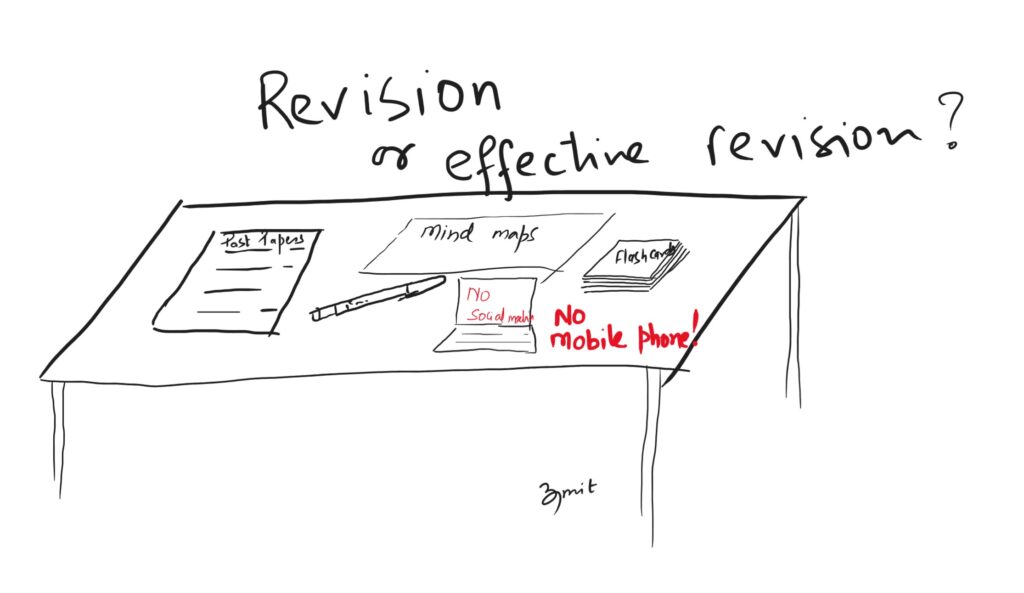
A student finishes a paper, checks the mark scheme, looks at the total, and often feels the main task is done. Some go a step further and make flashcards from questions they found difficult, hoping that repetition will improve performance next time.
But that process, by itself, does not always lead to meaningful improvement.
What often makes the difference is a much less comfortable question:
Which marks were lost unnecessarily?
Not the parts that were completely unfamiliar. Not the questions that were genuinely inaccessible under pressure.
The more valuable analysis often sits in responses that were very close:
- a method mark missed because one algebraic step was not shown
- an accuracy mark lost because of early rounding
- a correct process followed by notation that did not meet examination expectations
- units missing in a final answer where they were required
These are the places where grade boundaries quietly move.
In many cases, students need deliberate guidance to notice this, because naturally they focus on what they could not do, rather than what they nearly secured.
Looking at this through the lens of an IBDP and A Level examiner, a few technical habits repeatedly matter:
- If uncertain, present the full calculator answer first, then round to 3 significant figures unless the question indicates otherwise
- In financial contexts, 2 decimal places usually apply unless another instruction is given
- In multi-step calculations, always continue using the full calculator value rather than a rounded intermediate result
That final point deserves more attention than it usually receives. As examiners, we receive notes in the mark scheme covering possible answers where a student has used 3 significant figures in subsequent working, but there are also notes stating that early rounding should be penalised.
Yesterday, during my Grade 9 lesson, one student said: “I could have done two more questions if I had remembered the formula for the Sine Rule and the Cosine Rule.” We follow Modular IGCSE in Grade 9, and my response was simple. Those formulae are given on the second page of the paper. Which brings me to a final point: please make friends with your formula booklet. You do not need to memorise every formula.
Early rounding is one of those small habits that regularly costs the final accuracy mark, even when the mathematics itself is otherwise correct.
Quite often, movement between grades is not about learning new mathematics. It is about precision, discipline, and understanding how mathematical work is read under examination conditions.